


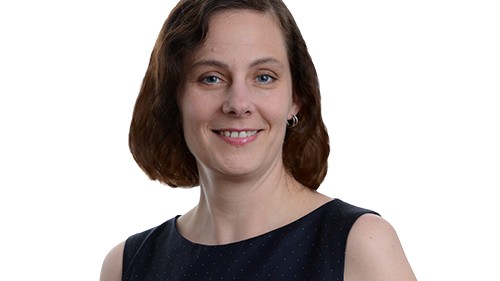
Image source: Platinum Asset Management
Ask A Fund Manager
The Motley Fool chats with fund managers so that you can get an insight into how the professionals think. In part 1 of our interview, Platinum Asset Management portfolio manager Dr Bianca Ogden reveals how she pivoted from the healthcare industry to funds management – and why that gives her an edge.
Investment style
The Motley Fool: What's your fund's philosophy?
Dr Bianca Ogden: The name is the Platinum International Healthcare Fund. The idea behind this fund is that it allows people to invest in the area of healthcare. And we define healthcare very broadly – it can be anything from an insurance company to a hospital, to even the area of agriculture and anything that has something to do to ultimately make us feel good.
One of the key things of the fund though is – I know that people use the word innovation now these days very often – it has always been about improving the standard of care, what companies can make healthcare more efficient and increase the access for people to healthcare.
That's the mandate, and ultimately we have no kind of restriction in terms of where we go globally or what market cap we look at.
So we have owned in the past Johnson & Johnson (NYSE: JNJ) on one side. But on the other side, a local tiny biotech that's kind of just a couple of million in market cap in Australian dollars. So, anything where we see value, we go.
MF: Your background is quite different to the typical fund manager. Can you tell us a bit about your professional history?
BO: I came out of the healthcare or pharmaceutical industry. I studied science at university [with a] focus on molecular biology – or viruses essentially. So I'm really a virologist by training.
I also looked at new targets in cancer research. In the end, whether you're a virologist, [when] it all comes together, you're a molecular biologist. You'd look at on a molecular level what's going on in diseases.
I've worked for two pharmaceutical companies, Novartis AG and Johnson & Johnson. I always was interested in how these companies actually make decisions. Why do they take one drug forward into bigger trials and why not the other?
And so I somehow came across funds management. And particularly at the time when I did my PhD in the UK, it was all about what else can you do other than work in the lab.
But I still didn't want to totally swap.
When I came to Australia by chance I got offered this opportunity at Platinum to essentially set up their healthcare strategy.
That was quite interesting because I didn't have any financial background. My dad is an accountant, so I have a little bit of finance in the family. But overall I didn't really do a CFA or anything, but I learnt most of that here at work.
Drug development or any innovation that's going on – that's what I'm very passionate about.
MF: To give our readers an idea, what are your two biggest holdings?
BO: Takeda Pharmaceutical Co Ltd and Sanofi SA. Now in the context of a biotech fund or a healthcare fund, these are probably quite boring.
But what you have to understand is biotechs can be quite volatile, so having some of these big juggernauts offers you a little bit of stability. So, they don't really reflect what's really in it, but these are the top two holdings.
Buying and selling
MF: What do you look at closely when considering buying a stock?
BO: I obviously pay a lot of attention to science and to the people that manage these companies, and who works there as well. From the scientists that essentially work there and also to the composition of the board and who they are. I also pay close focus on what mistakes these companies have made and how they'd dug themselves out of a hole.
Then I look at the competition, and that will also involve private as well as public companies. So I focus a lot on private companies as well.
And in the end, you always tie that back to what is the valuation in the context of the global healthcare sector.
MF: I'm sure for that research you have an advantage compared to someone from a finance background.
BO: Yeah. I think you have to spend some time in that industry, healthcare, just to understand some of the lead times, some of the challenges.
I had someone recently say to me about a local company, can't remember the name, saying that, 'Well, this company has done nothing for the last decade'. And I see it totally differently because things that the company has done remarkably well in how much money they have and what they have achieved.
Sometimes people that have a [health] degree, but have never worked in the healthcare industry, don't really put what's going on into proper perspective. They tend to look at spreadsheets and find it really cool to be in finance. I'm the other way.
MF: Would it be fair to say for a lot of healthcare, especially pharmaceutical companies, investor patience can be required because the research and development times are quite long?
BO: Yeah, I invest. So, that means it's a long-term investment.
It's all about 'how does this company look like in the next 5 years?'. Is it going to be a better company, is it going to be the same, or is it going to deteriorate?
Even a normal drug launch doesn't work like a new iPhone where everyone queues for it. Luckily we don't queue up for drugs, so that's good!
MF: What triggers you to sell a share?
BO: To be honest, I don't sell out often.
Because the longevity in these companies is quite good. With some of the bigger pharma companies, they follow a traditional kind of value [cycle]. There's a point where basic evaluation isn't that exciting anymore. And I tend to sell out and may come back later.
I also reduce things heavily when there is absolute craziness in the market. We've had that recently in a stock called Pacific Biosciences of California Inc, which we bought when it was in the US$4 range. And then it went up, I think all the way to over US$50 or even more.
And then it went down massively because I think everyone got so excited by genomics – not that the company has done anything wrong or anything. It was just the market getting too excited and that tends to be where we heavily trim back.
Tomorrow in part 2 of our interview, Dr Ogden uses her health sciences background to reveal 2 still-under-the-radar stocks plus 2 others that will continue to bathe in glory.